Layer 01
Owned sources
Factual service pages, documented cases, and research with its method shown. Your team can directly review and improve these pages.
Identify the owned and external sources behind important buyer questions, find unsupported claims and evidence gaps, and prioritize credible assets that make the company easier to verify.
Scope and price are agreed before work starts. We review every request manually and respond within one business day.
/ What it is
We start with the questions buyers ask, then check whether your website and relevant independent sources support the answers.
Signs the work is needed: offer facts are outdated somewhere important, results are asserted without documented evidence, or comparisons buyers care about are under-explained.
/ Why now
Before commissioning more content or outreach, identify the questions your existing evidence does not answer. A source map helps your team decide which facts to correct, which evidence to create, and which publishers to approach.
/ The three layers
Factual service pages, documented cases, and research with its method shown. Your team can directly review and improve these pages.
Editorial coverage and references your company does not control. We research, develop angles, and pitch; publishers decide acceptance, editing, timing, and links.
Genuine, useful participation in the approved channels where buyers discuss your category. Participation adds context; it does not make a source independent.
/ Source environment
Your company and evidence
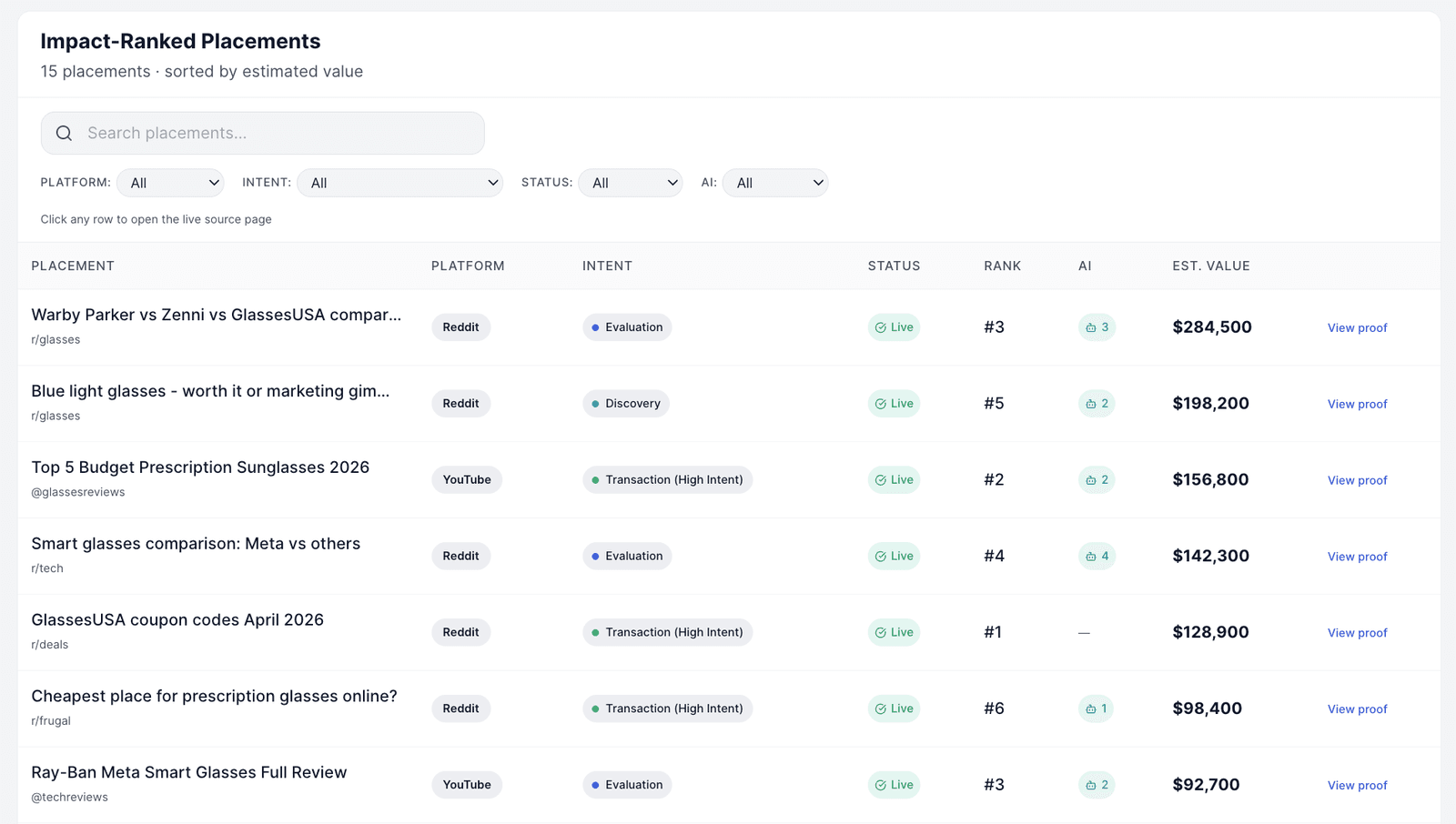
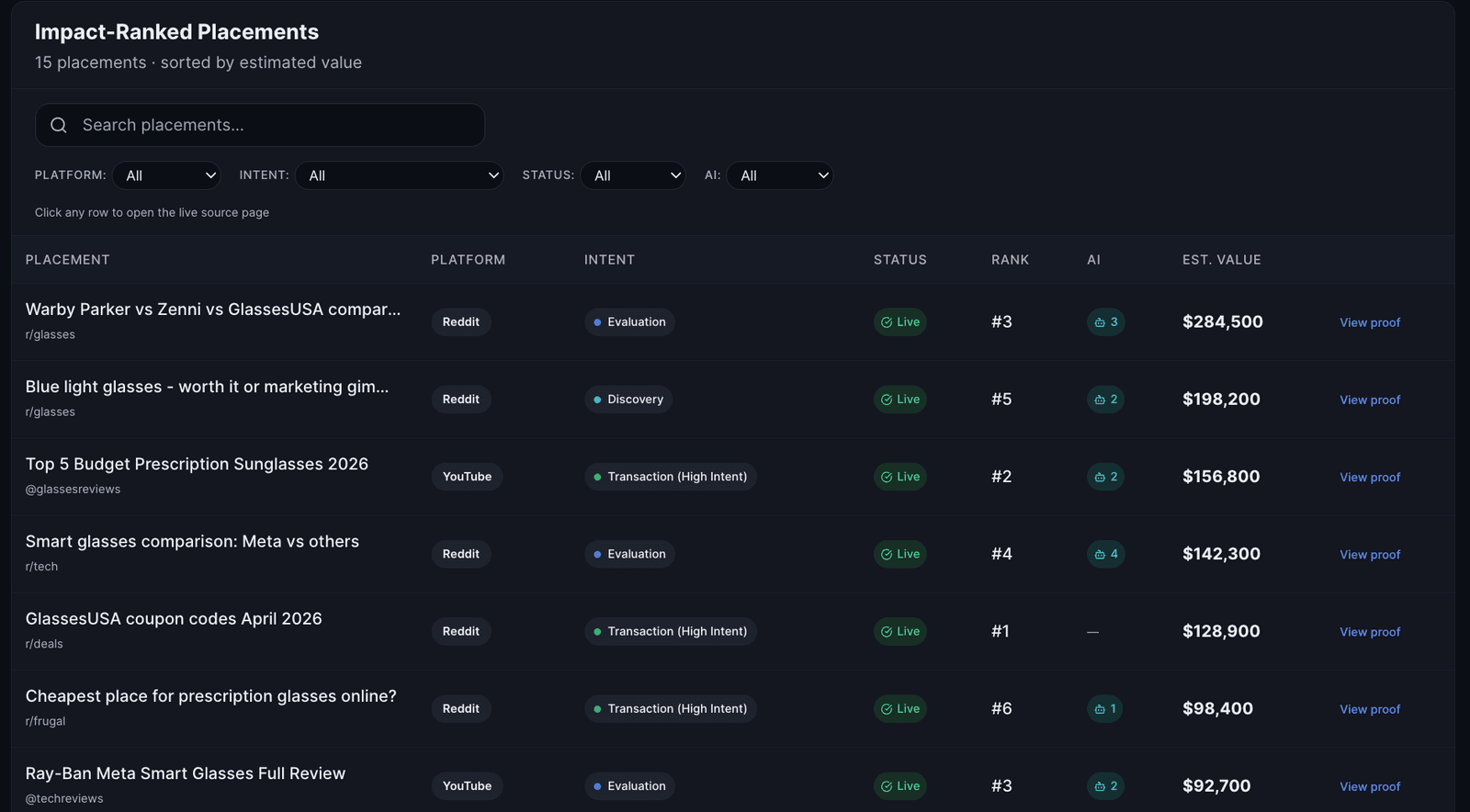
Illustrative source map view. Not client data.
Researching a source does not mean CiteWorks controls or manages it. Execution is limited to the channels and services agreed in scope.
/ Deliverables
Output 01 / Source and claim map
The buyer question and the claim behind it.
The sources answering it today, with the date each reading was taken.
Output 02 / Gap-and-action brief
Which facts, evidence, or reviews are missing.
Work that would correct the gap, with owners and approvals.
Output 03 / Execution and validation plan
A record of completed work and dated source checks against the agreed actions, owners, and approvals.
/ Illustrative example
Illustrative rows, not client data. External corrections are requested, never guaranteed; publishers and platforms decide what they change or include.
| Source gap | Action | Validation |
|---|---|---|
| A service claim has no supporting evidence | Document a real case with client approval | The published case shows its method, scope, and evidence |
| A company description is outdated | Request a factual correction from the publisher | The response is recorded, with the actual change if accepted |
| A recurring buyer question goes unanswered | Publish an expert-reviewed owned answer | The page addresses the question and cites available evidence |
Scroll the table sideways to see every column.
/ Process
Review the priority questions and the claims behind them. Your team confirms facts and supplies expert input.
Agree the evidence and source priorities, and which actions sit within approved services.
Produce and coordinate the scoped work, keeping a review record of what was published, requested, and observed.
/ Why now
AI models and answer systems are still changing what they retrieve and recommend. That creates an opening: you can improve the evidence they find before incomplete or inconsistent answers become familiar to buyers. Start with a benchmark now, then measure what changes.
/ Pricing & scope
Adjust the quantities to create a planning estimate. You can use a service on its own or combine it with the full five-step system. We review every configuration before work begins.
Monthly · $100 per cluster per month · minimum 10
1 cluster = 10 related buyer-intent prompts. The controlled starting benchmark is 10 clusters / 100 prompts across 6-7 agreed LLMs.
Controlled baseline.
$1,000
Monthly · $500 per study/report/data asset per month
Not included.
$0
Monthly · $50 per published item/implementation per month
Not included.
$0
Estimated first month $1,000. Estimated monthly total $1,000.
Editorial outreach, sponsorships, publisher fees, and paid amplification are not guaranteed or silently included. Approved third-party costs are scoped separately and passed through at cost.
Planning estimate only. Final scope, cadence, dependencies, third-party costs, and commercial terms are confirmed in a written statement of work. AI rankings, citations, traffic, revenue, and editorial outcomes are not guaranteed.
Measurement describes a defined sample of prompts, platforms, and locations on the dates observed, and results vary between runs. Client factual approval is required before anything is published, and publishers and platforms keep editorial and ranking control.
We review the configuration for dependencies, sequencing, feasibility, and third-party costs before proposing a final scope.
/ System fit
/ FAQ
There is some overlap in outreach and authority work. This scope is organized around claims, questions, sources, and validation rather than a link count; links may result, but they are not the objective.
We research targets, develop editorial angles, and coordinate pitches. Editors decide acceptance, wording, timing, and links, so placement in any specific publication cannot be guaranteed.
Execution happens only through the approved services in scope, such as website content, original research, authority publication coordination, LinkedIn or Medium publishing, and YouTube video content. Research can examine a wider source environment than the channels CiteWorks directly manages.
As completed actions plus dated, scoped observations of the source environment, including which sources address your priority questions and where your company appears. We record what changed; we do not claim causal guarantees.
/ Next step
Share the claims and questions you want supported. We'll discuss the gaps you are seeing and agree the scope before work begins. We review every request manually and respond within one business day.