

Proof across Google, AI answers, and the sources that shape buyer decisions.
CiteWorks Studio helps growth-minded companies improve how they are found, cited, compared, and recommended across modern search environments.
These case studies show how visibility improves when companies strengthen more than rankings. The work often includes GEO, citation architecture, AI search visibility, technical SEO, content strategy, source-layer authority, and public evidence across the places buyers and AI systems use to make sense of a market.
SHOWING 19-23 OF 23

Insurance Technology AI Search Case Study
See how an insurance tech brand gained 848 page-1 keywords, 11 AI-cited pages, and $11K in monthly branded value through 25 engagements.
- Last modified
- Sep 9, 2026
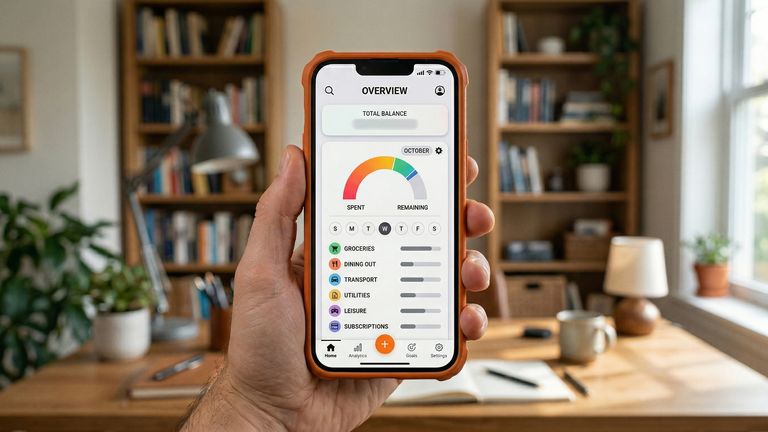
Budgeting App AI Search Case Study
See how a budgeting app gained 173 page-1 keywords, 47 AI-cited pages, and $3.3K in monthly branded value in just 3 days with 30 engagements.
- Last modified
- Sep 9, 2026

Kitchen Appliance AI Search Case Study
See how a kitchen appliance brand gained 2,398 top-10 keywords, 100 AI-cited sources, and 15% more LLM mentions.
- Last modified
- Sep 9, 2026
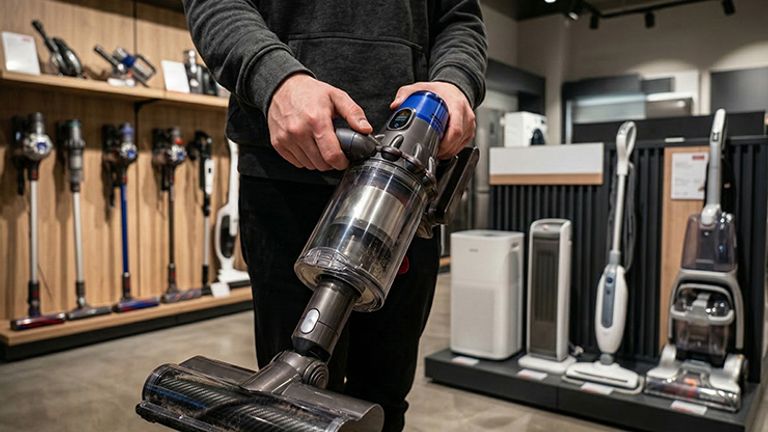
Household Appliance AI Search Case Study
See how a household appliance brand gained 13,679 top-10 keywords, 100 AI-cited sources, and 400% more ChatGPT mentions.
- Last modified
- Sep 9, 2026

Job Board AI Search Case Study
Discover how a job posting platform transformed its AI visibility, achieving a 71% increase in brand mentions and generating nearly $8.
- Last modified
- Sep 9, 2026
Bring this to your own market
Want the same lens applied to your category or company?
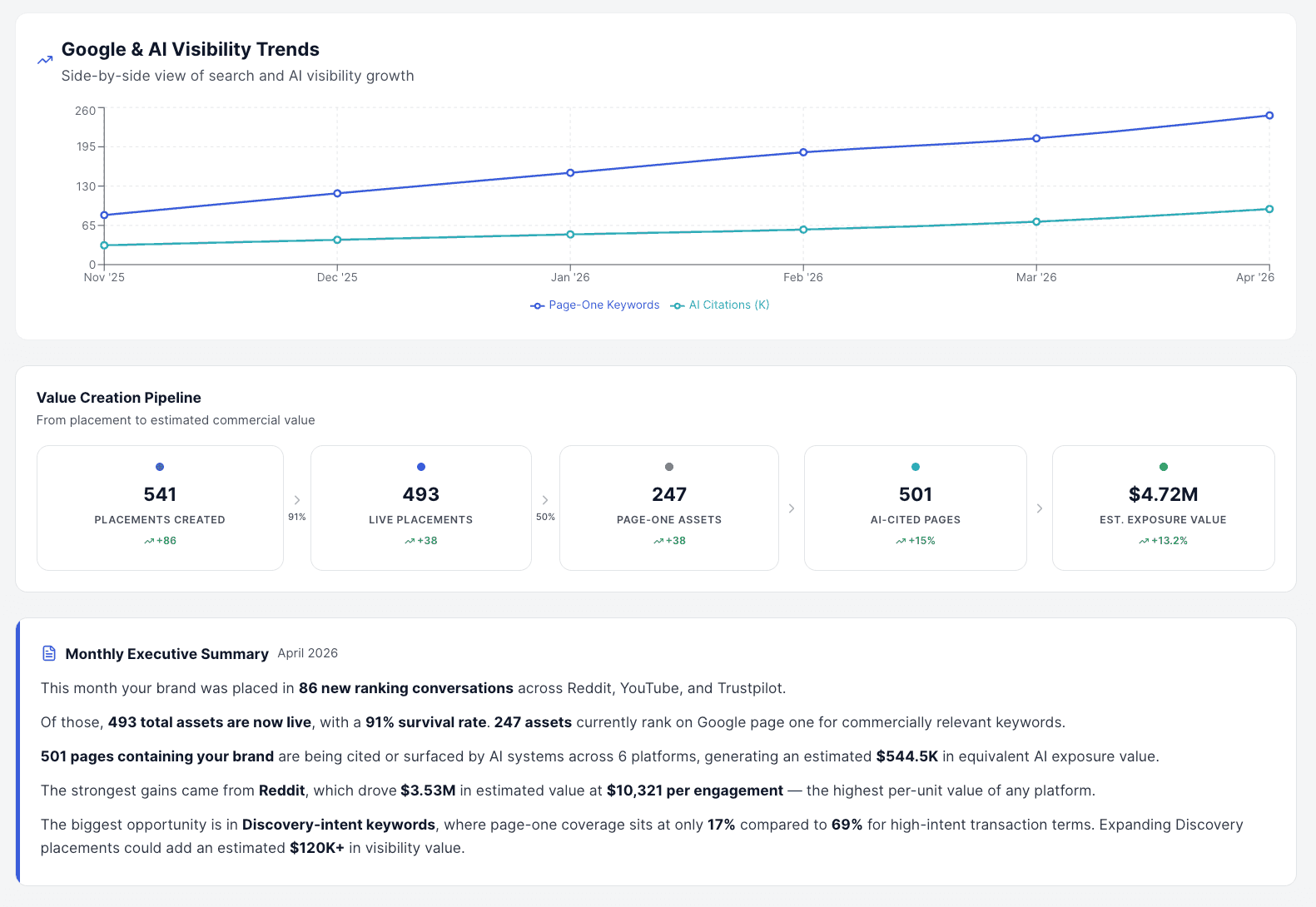
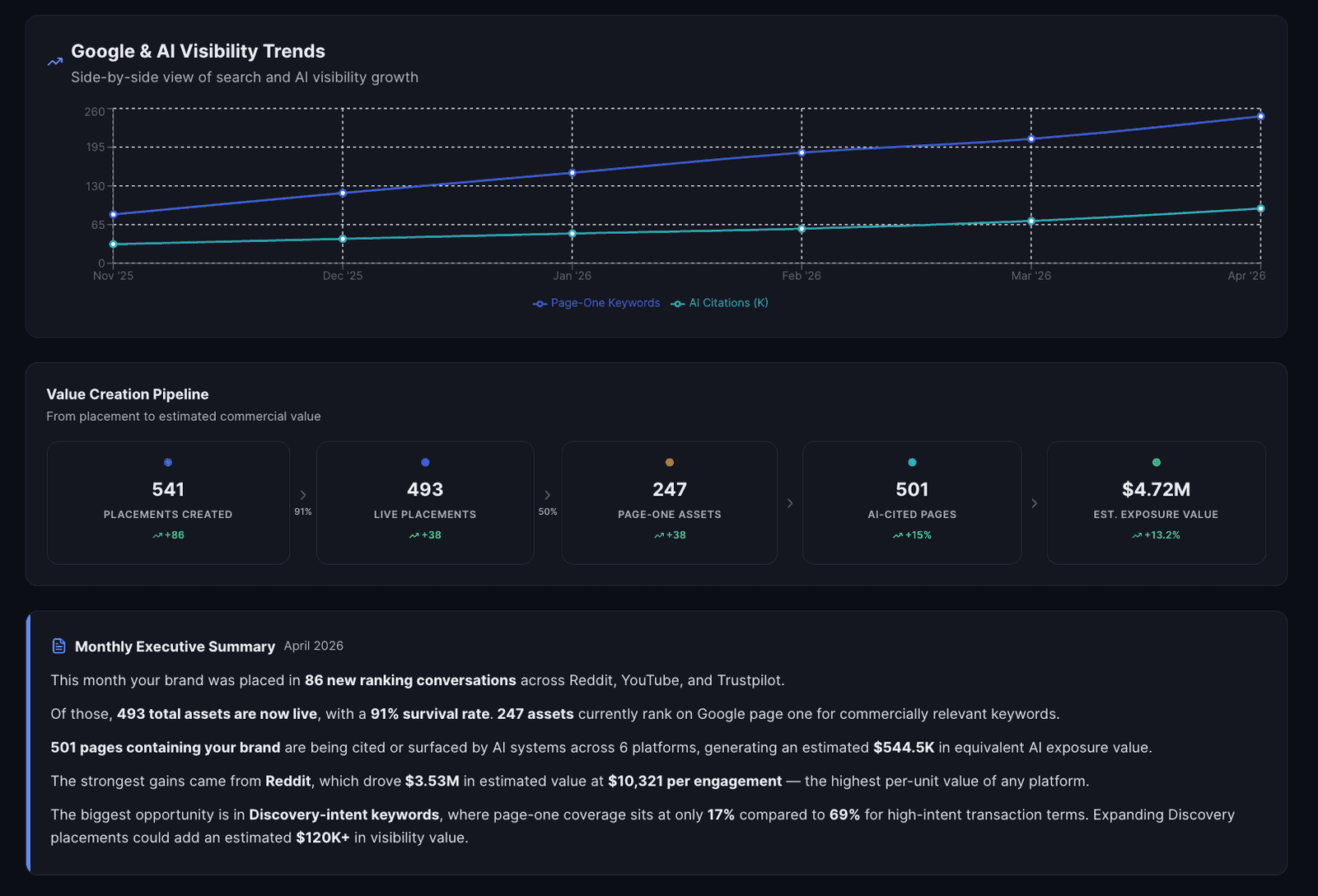
Request an AI Visibility Audit and we'll show you where AI systems are recommending - and overlooking - your brand, and what to fix first.
/ Why this proof
These are not traffic stories. They are visibility-system stories.
Modern buyers do not move through one search result.
They search Google. They ask AI systems. They read comparison pages. They check reviews. They watch videos. They scan public discussions. They validate brands through trusted third-party sources before making a decision.
That means the strongest visibility programs do not measure only rankings or traffic. They measure whether a company becomes easier to find, easier to validate, easier to cite, and easier to recommend.
CiteWorks Studio case studies focus on movement across:
/ Results snapshot
Published outcomes across AI search and Google visibility.
Each case uses its own measurement framework, category context, and timeframe. Read these as published case-study outcomes, not a universal benchmark.
VISUAL COMPARISON
Movement across four featured verticals.
Indicative scale per metric, normalized within each row.
AI Visibility Movement
% lift
Tax Relief
112.5%
Household Appliance
400%
Crypto Wallet
120%
Pest Control
—
Search Visibility Movement
keywords in top 10
Tax Relief
9,984
Household Appliance
13,679
Crypto Wallet
4,136
Pest Control
520
Source-Layer Movement
sources strengthened
Tax Relief
500+
Household Appliance
100+
Crypto Wallet
300+
Pest Control
23+
TAX RELIEF
112.5% increase in AI Overview brand mentions across 19 high-intent tax queries
#6 average ranking position; 9,984 keywords in Google's top 10
500+ high-impact community sources and cited pages strengthened
HOUSEHOLD APPLIANCE
400% increase in ChatGPT brand mentions across 100+ high-intent queries
#7 average ranking; 13,679 keywords in Google's top 10
100 high-impact community sources and cited pages strengthened
CRYPTO WALLET
120% increase in AI Overview brand mentions across 80 high-intent crypto wallet queries
#6 average ranking; 4,136 keywords in Google's top 10
300+ high-impact cited pages and discussion sources strengthened
PEST CONTROL
64 cited pages influenced in 5 days for ChatGPT and AI Overviews
520 high-value keywords reached Google's top 10
23 high-authority citation opportunities activated
Source note: published outcomes from the CiteWorks cross-case synthesis. Cases use different surfaces, timeframes, and metric types and should be compared descriptively rather than blended into a single benchmark.
/ Patterns
What repeats across the case studies.
The categories are different, but several patterns repeat.
PATTERN / 01
AI visibility depends on public evidence.
AI systems do not rely only on a company's website. They summarize, compare, and recommend using public sources, third-party references, reviews, discussions, and cited pages.
PATTERN / 02
Citation footprint matters.
Brands improved visibility when their presence became stronger and clearer across the sources that shape buyer trust and AI-generated answers.
PATTERN / 03
High-intent queries beat generic awareness.
The strongest opportunities came from decision-stage searches, comparison prompts, buyer questions, and category-specific recommendation moments.
PATTERN / 04
Category context changes the strategy.
Trust-led, urgent-intent, and comparison-heavy categories do not behave the same way. Each requires a different source-layer and content strategy.
PATTERN / 05
Rankings and AI visibility work together.
The case studies show movement across both traditional Google visibility and AI-shaped discovery — but not always through the same metric or surface.
/ Measurement
How we measure case study movement.
CiteWorks Studio case studies are designed to show visibility movement across the search environments that influence buyers. Depending on category and engagement, measurement may include:
Disclosure: published monetary values are directional estimates based on tracked keyword visibility and modeled paid-equivalent value. They are not exact revenue attribution.
/ Why this matters
Case studies should show more than "we got traffic."
Traffic alone does not explain whether a company is becoming easier to trust, compare, cite, or recommend. These case studies focus on the visibility signals that matter in modern search:
Is the company appearing in high-intent searches?
Is the company being cited by AI systems?
Is the brand present in comparison environments?
Are third-party sources supporting its authority?
Are competitors being recommended more often?
Is the company easier for buyers to validate before they convert?
/ Best fit
These case studies are most relevant if visibility affects your growth.
CiteWorks Studio works best with companies where being found, cited, compared, and recommended has real commercial value.
You do not need to be an enterprise company. You do need a market where search visibility, source authority, and buyer trust matter.
/ FAQ
Common questions about CiteWorks Studio case studies
Why are the case studies anonymized?
What do these case studies measure?
Are the monetary values revenue numbers?
Are all case studies measured the same way?
What is the main pattern across the case studies?
Who are these case studies most relevant for?
Find out where your visibility is breaking down.
The strongest case studies start with a clear diagnosis.
CiteWorks Studio helps growth-minded companies identify where they are losing visibility across Google, AI answers, citation sources, competitor positioning, technical SEO, content structure, and source-layer authority.
Then we build the corrective-action plan.